A warm house in July is uncomfortable, but it is rarely dangerous. Most air conditioners that stop cooling have a simple cause, and a few have a larger one. This guide walks through what is safe to check yourself, what to leave alone, which repairs are the big ones, and how to decide whether a repair is worth making.
What is likely happening when the air conditioner stops?
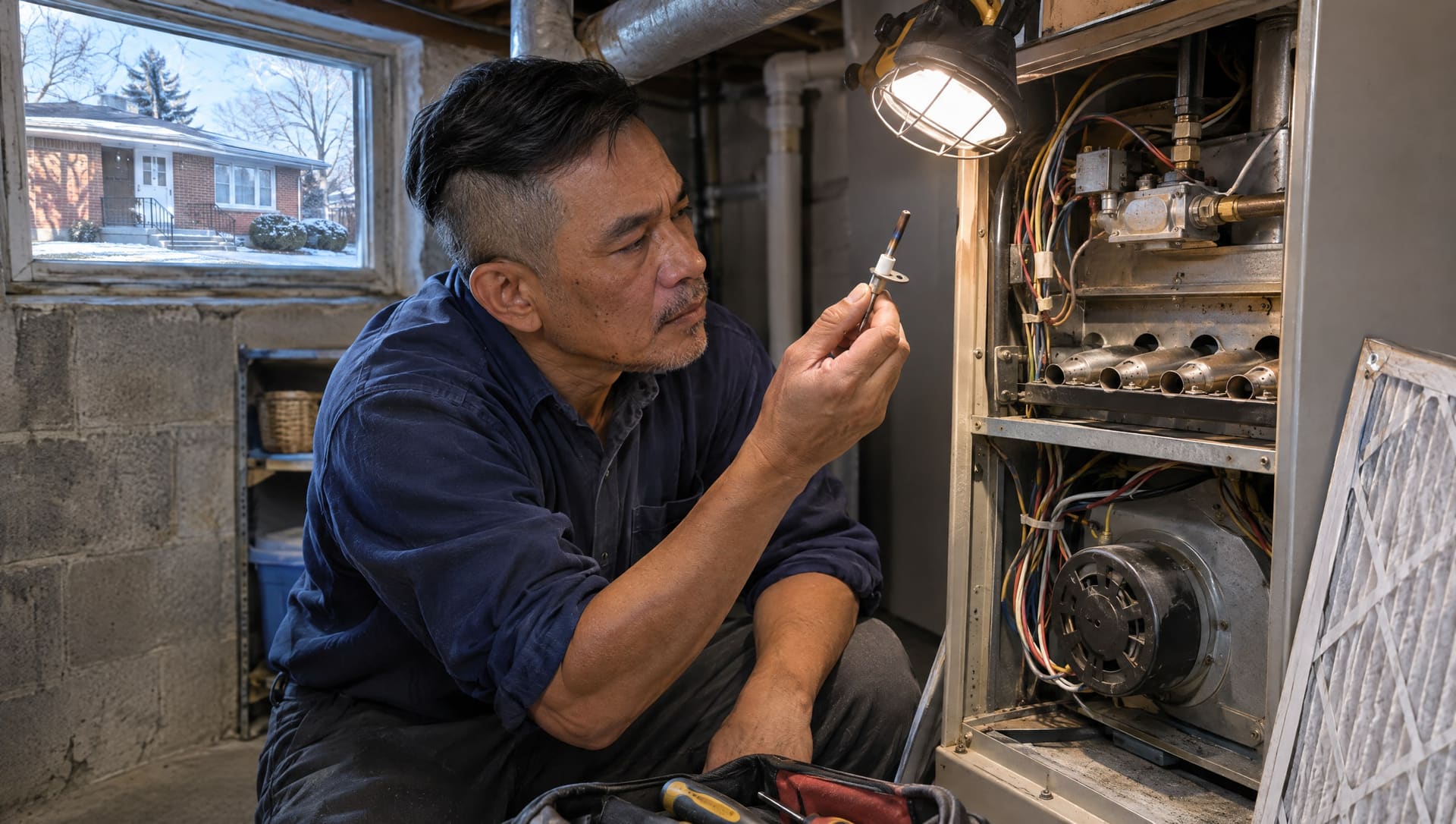
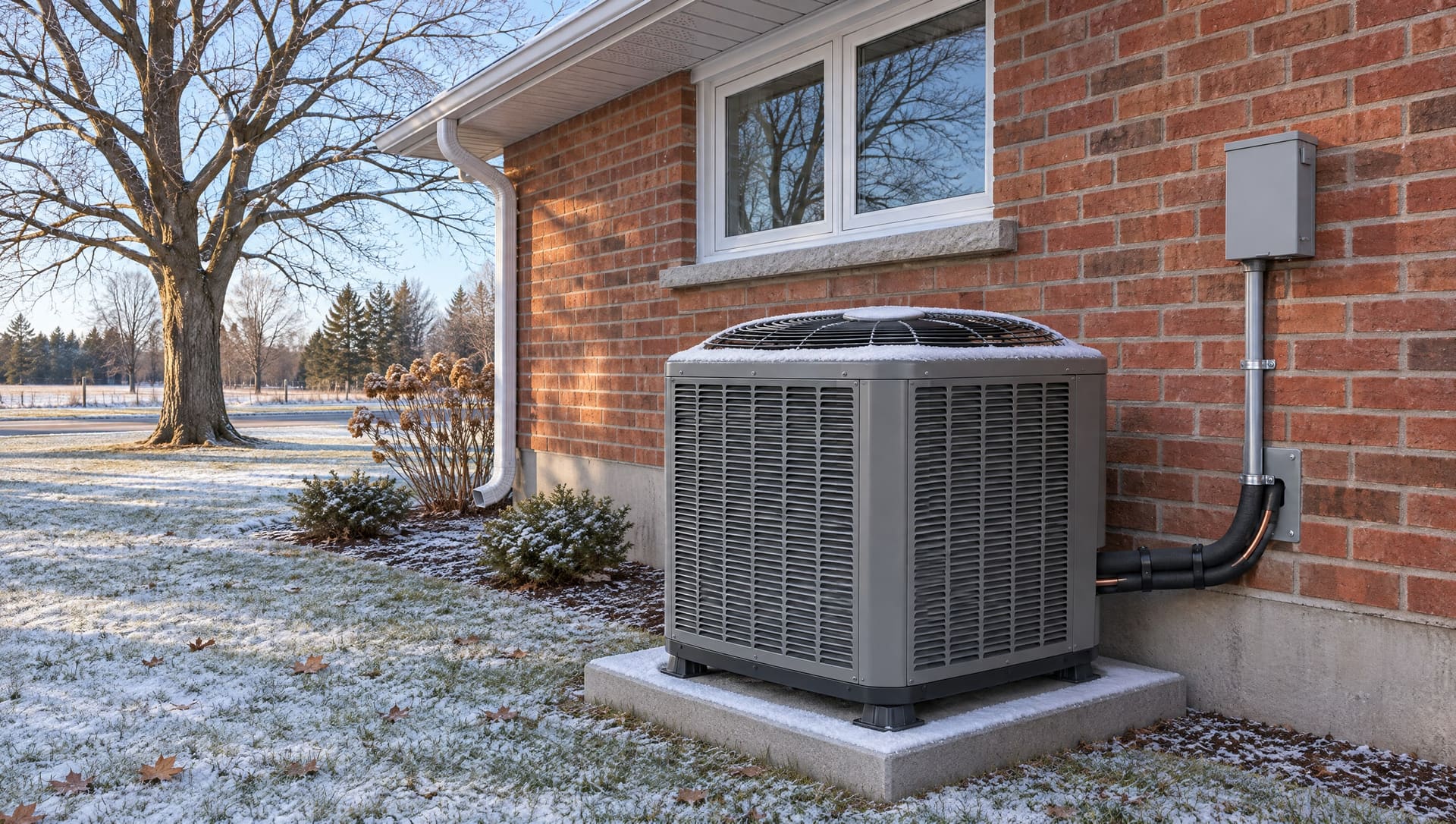
Central air in most Bethany homes shares parts with the furnace. The outdoor unit holds the compressor and the outdoor coil. Indoors, a cooling coil sits on top of the furnace, and the furnace blower pushes air across it and through the ducts. So when the cooling stops, the cause can be outdoors, indoors, or in the furnace itself.
The common causes are small ones: a thermostat setting, a tripped breaker, a clogged filter, a blocked condensate drain, or a failed capacitor that helps the outdoor motors start. The larger causes are a refrigerant leak or a worn-out compressor. Starting with the small checks usually tells you which kind of problem you have.
What is safe to check before calling?
These checks take a few minutes and need no tools:
- Set the thermostat to cool and a few degrees below the room temperature. If it runs on batteries, replace them.
- Look at the electrical panel. If the breaker for the air conditioner or the furnace has tripped, reset it once. If it trips again, leave it off.
- Make sure the furnace switch, usually on the wall near the furnace, is on. The air conditioner needs the furnace blower to move air.
- Check the furnace filter. A filter packed with dust can starve the cooling coil of air until it freezes.
- Walk around the outdoor unit. Clear grass clippings, leaves, cottonwood fluff and anything stacked against it. It needs open space to release heat.
- Look near the furnace for water on the floor or a small pump that is full. Many systems have a safety switch that shuts the cooling off when the condensate drain backs up.
If you see ice on the copper lines or the indoor coil, switch the thermostat from cool to off and set the fan to on. Let the ice melt fully before trying cooling again. Running a frozen system does not help it, and the ice itself is a useful clue for the technician.
What should be left alone?
Some things are best left to the person who comes to look at it:
- Do not open the panels on the outdoor unit. The capacitor inside can hold a charge even with the power off.
- Do not reset a breaker over and over. A breaker that keeps tripping is protecting a motor or a wire.
- Do not add refrigerant from a store-bought kit. Refrigerant work in Ontario is a compulsory trade, and adding refrigerant without finding the leak only delays the same call.
- Do not spray water into the electrical parts of the outdoor unit while it is running.
If you notice a burning smell, buzzing from the outdoor unit that does not stop, or a breaker that trips the moment it is reset, turn the system off at the thermostat and leave it off until it has been looked at. The house will be warm for a while, and that is all.
Does the kind of house matter?
It does, and it often explains the symptom.
In the older homes on Glengarry Road and Davis Street, built in the late nineteenth century, ducts were added long after the house was built and are often squeezed into tight spaces. Upstairs rooms can stay warm even when the system is working properly. That is a duct and airflow question rather than a broken air conditioner, and it is worth knowing before anyone talks about replacing equipment. In some of these houses a ductless system is a better fit than forcing more air through small ducts.
In Woodland Hills and the newer streets around Rustlewood Avenue and Country Place, the furnace is usually a high-efficiency condensing unit. The furnace and the cooling coil often share a condensate drain and a small pump. When that drain clogs with summer algae or the pump fails, a safety switch stops the cooling. It is one of the most common summer calls in these houses, and one of the simpler ones to fix.
What is the most expensive repair on an AC unit?
The compressor is the largest single repair. It is the heart of the outdoor unit, and replacing it means recovering the refrigerant, cutting out the old compressor, brazing in the new one, pulling the system into a vacuum and recharging it.
Close behind are the coils. A leak in the outdoor coil or the indoor cooling coil usually means replacing that coil, with the same refrigerant work around it. The indoor coil sits on top of the furnace, so replacing it can also involve some sheet metal work.
Smaller repairs include capacitors, contactors, fan motors, thermostats, condensate pumps and drain cleaning. These are the ones most systems need at some point, and they rarely raise the question of replacement.
Why is AC so expensive to fix?
A few things add up:
- Refrigerant work is careful, slow work. The system has to be opened, emptied, sealed, tested for leaks and recharged by weight.
- Some older systems use a refrigerant that is no longer made for new equipment, so it is scarce and costly to refill.
- Major parts are matched to the system, and a new compressor or coil has to suit the existing equipment.
- Finding a slow leak can take time, especially in a coil.
Work is performed by 313A refrigeration and air conditioning mechanics.
Before any of that work starts, you should see the price in writing and decide whether to go ahead.
What is the lifespan of an AC unit?
There is no fixed date. A central air system that is sized well, kept clean and serviced can run for many summers. A few things shorten its life: a dirty filter or coil, an outdoor unit crowded by plants, low refrigerant from a slow leak, and a system that is too large for the house and switches on and off constantly.
Age on its own is not a reason to replace. A system that cools well, has no leaks and only needs a small part is usually worth keeping.
When is a repair worth it?
A few plain questions help:
- Is the repair small, such as a capacitor, contactor or drain? Then repair it.
- Is it a compressor or coil on an older system that uses the older refrigerant? Replacement is often the better use of the money.
- Has the system needed refrigerant more than once? A repeating leak tends to keep repeating.
- Is the furnace also near the end of its life? Replacing both together can make sense, and it is a good moment to consider a heat pump that cools in summer and heats in shoulder seasons. Our guide on heat pumps, high-efficiency furnaces or both covers that choice.
- Is the equipment still under the manufacturer's warranty? Find the registration papers or model details before the visit. Parts may be covered even when labour is not, and some manufacturers require proof of regular maintenance.
You do not need to decide on the spot. It is reasonable to ask for the repair price and a replacement price, take a day, and choose.
How can the next breakdown be avoided?
Change the filter regularly through the cooling season, keep a clear space around the outdoor unit, and have the system checked before the hot weather arrives. A spring check catches weak capacitors, slow drains and low refrigerant while they are still small. See furnace and AC maintenance for what that visit covers.
If your central air has stopped and the simple checks have not helped, see air conditioner repair for how a visit from Bethany Heating works.