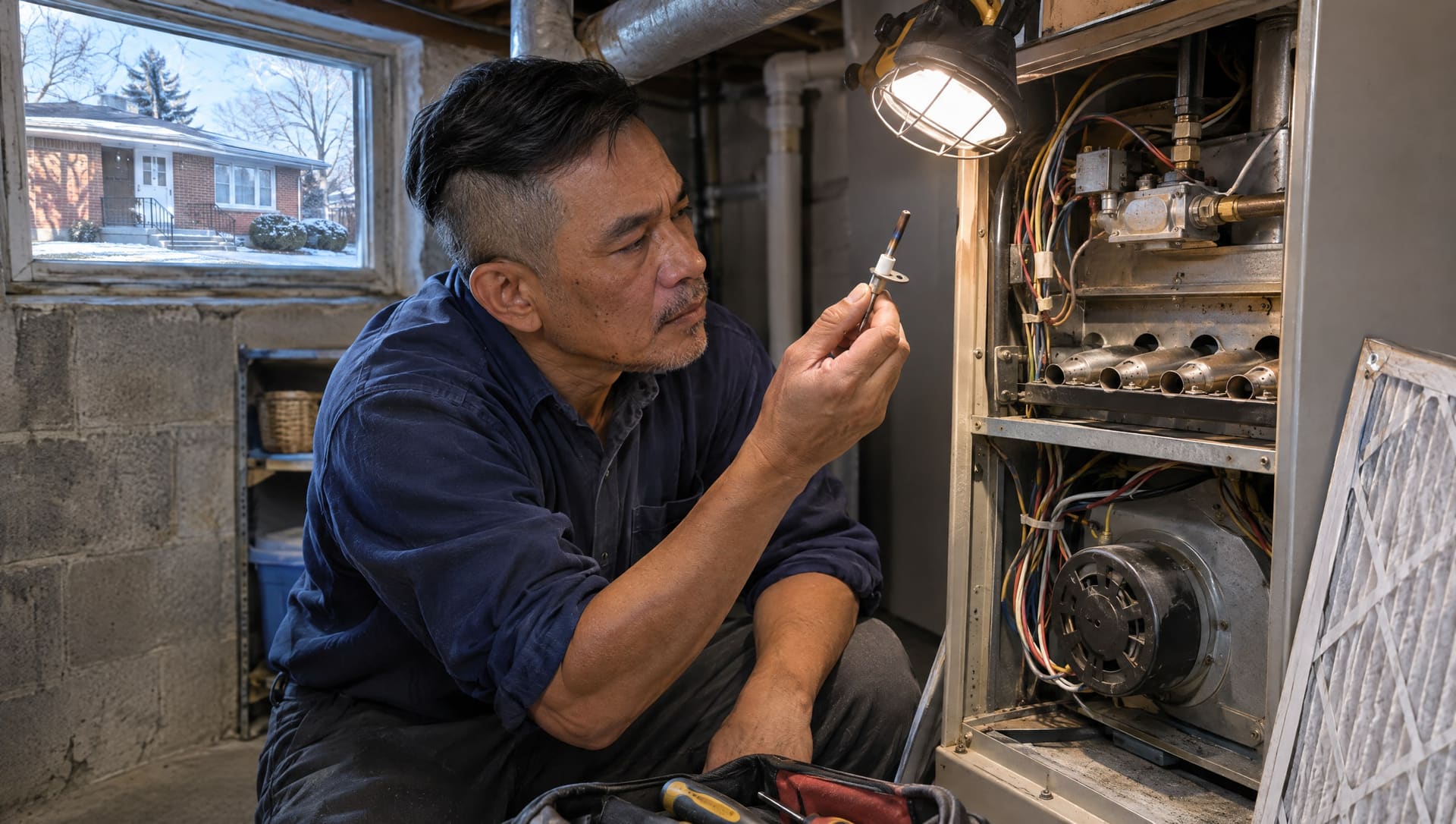
If your furnace is getting older, or you are thinking about a heat pump, the choices can feel bigger than they are. There is no single right answer for every house. There is usually a sensible answer for yours, and it depends on a few things you can find out without any rush: what fuel reaches your road, how your house is built and ducted, and how you want to balance running costs against the cost of new equipment.
This guide walks through those questions in order. Nothing here needs deciding tonight.
What is the most efficient heating system in Canada?
It helps to separate two ideas: how efficiently a system turns energy into heat, and how much that heat costs you.
A high-efficiency condensing furnace burns natural gas or propane and keeps almost all of that heat in the house. It does this by cooling the exhaust so much that water condenses out of it, which is why these furnaces vent through plastic pipe out the side wall and need a condensate drain.
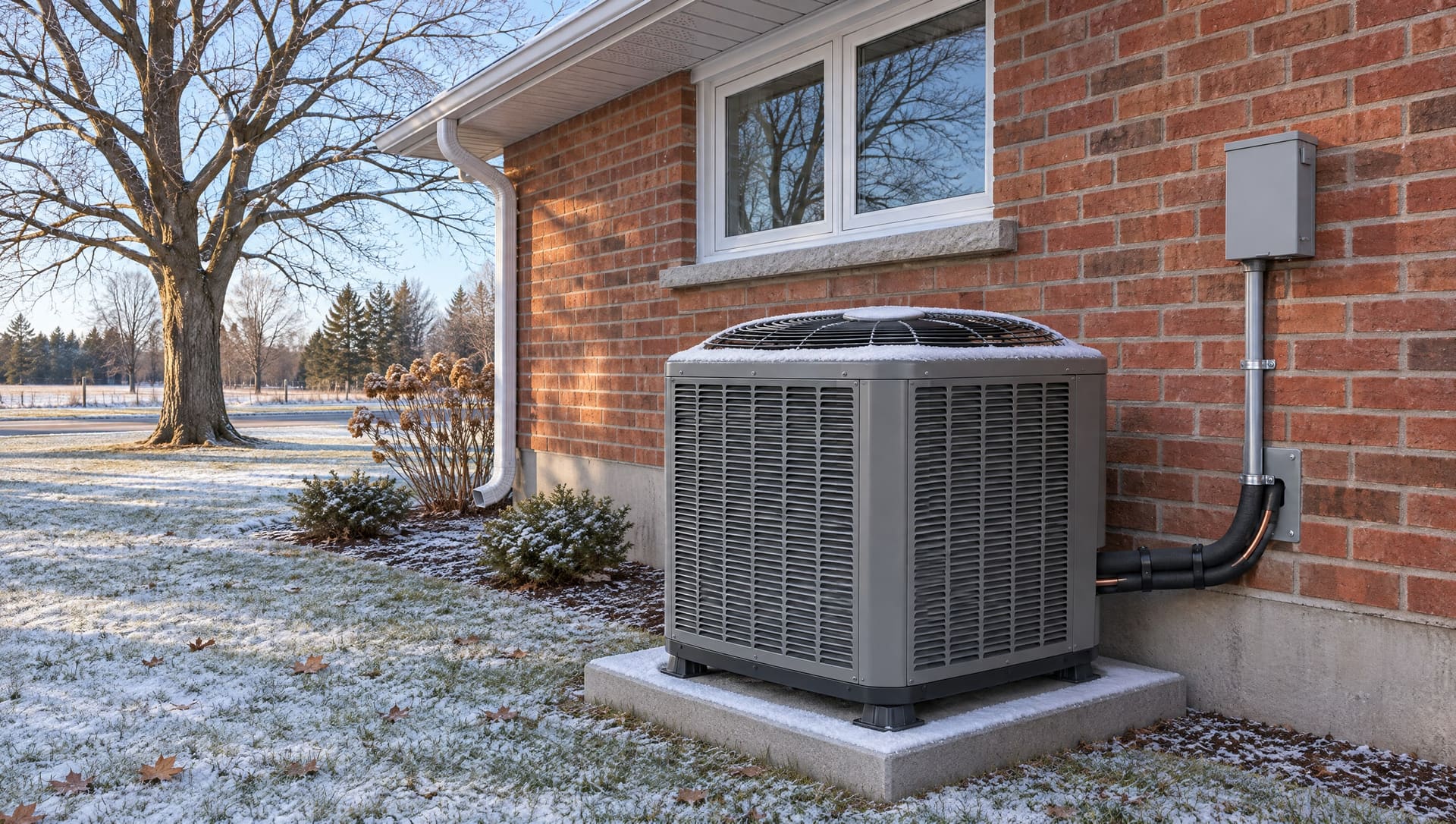
A heat pump works differently. It does not make heat by burning anything. It moves heat from the outdoor air into the house, using electricity to run the compressor and fans. Because it is moving heat rather than creating it, a heat pump can deliver more heat than the electricity it uses. On that measure it is the most efficient option most homes can install.
The catch is that a heat pump's output and efficiency fall as the outdoor air gets colder. Cold-climate models are designed to keep working well into a real Canadian winter, but on the coldest nights they work harder, and many homes pair them with a backup heat source.
So the most efficient system on paper is usually a heat pump. The most sensible system for a particular Bethany house may be a heat pump, a furnace, or the two working together.
What is the best and cheapest way to heat your house?
The cheapest way to heat a house is the one that matches the fuel you have, the house you live in, and what you already own. A few things shape that.
- **What fuel is available.** Natural gas is supplied in the City of Kawartha Lakes, and the Ontario Energy Board has approved a community expansion project that builds pipelines from the Township of Cavan-Monaghan into the city. Even so, some rural properties around Bethany are not on a gas line and heat with propane, oil or electricity. If you are not on natural gas, a heat pump often looks much more attractive.
- **How tight the house is.** Air sealing, attic insulation and good windows lower the bill no matter which system you choose, and they let you install smaller equipment.
- **The state of your ducts.** A heat pump and a modern furnace both need ducts that can move enough air. Where ducts are small or awkward, a ductless heat pump can heat some rooms without opening walls.
- **The age of what you have.** If your furnace is fairly young and working well, adding a heat pump alongside it can make more sense than replacing anything.
Running costs also move with energy prices, which change over time. A useful habit is to ask for an estimate of yearly running costs for each option based on your own house and your actual fuel, rather than a general rule.
How do Bethany's houses change the answer?
The houses on Glengarry Road and Davis Street were built in the late nineteenth century and first heated with wood or coal stoves. Heating systems were added later, so technicians often find ducts squeezed into tight spaces, rooms that heat unevenly, and brick chimneys that need a liner or a new vent when the heating equipment changes. In these homes, a ducted heat pump may need duct work first. A ductless heat pump for the cold rooms, with the existing furnace kept for backup, is often a gentler place to start. If the furnace is replaced with a side-vented high-efficiency unit, the old chimney needs checking so any appliance still using it vents properly.
Woodland Hills, Rustlewood Avenue and Country Place are newer, built from the late 1990s onward. These homes usually already have high-efficiency condensing furnaces with plastic side-wall vents and reasonable ductwork. Adding a heat pump to the existing furnace, often called a hybrid or dual-fuel set-up, is commonly straightforward here. The furnace's fan moves the air, the heat pump does most of the heating in spring, fall and milder winter days, and the furnace takes over when it gets very cold.
What does snow mean for either choice?
At Peterborough A, the nearest Environment Canada climate station, the 1981-2010 normals record 151.2 cm of snow a year, with January the snowiest month at 40.0 cm and extreme snow depths of up to 71 cm. That shapes both systems.
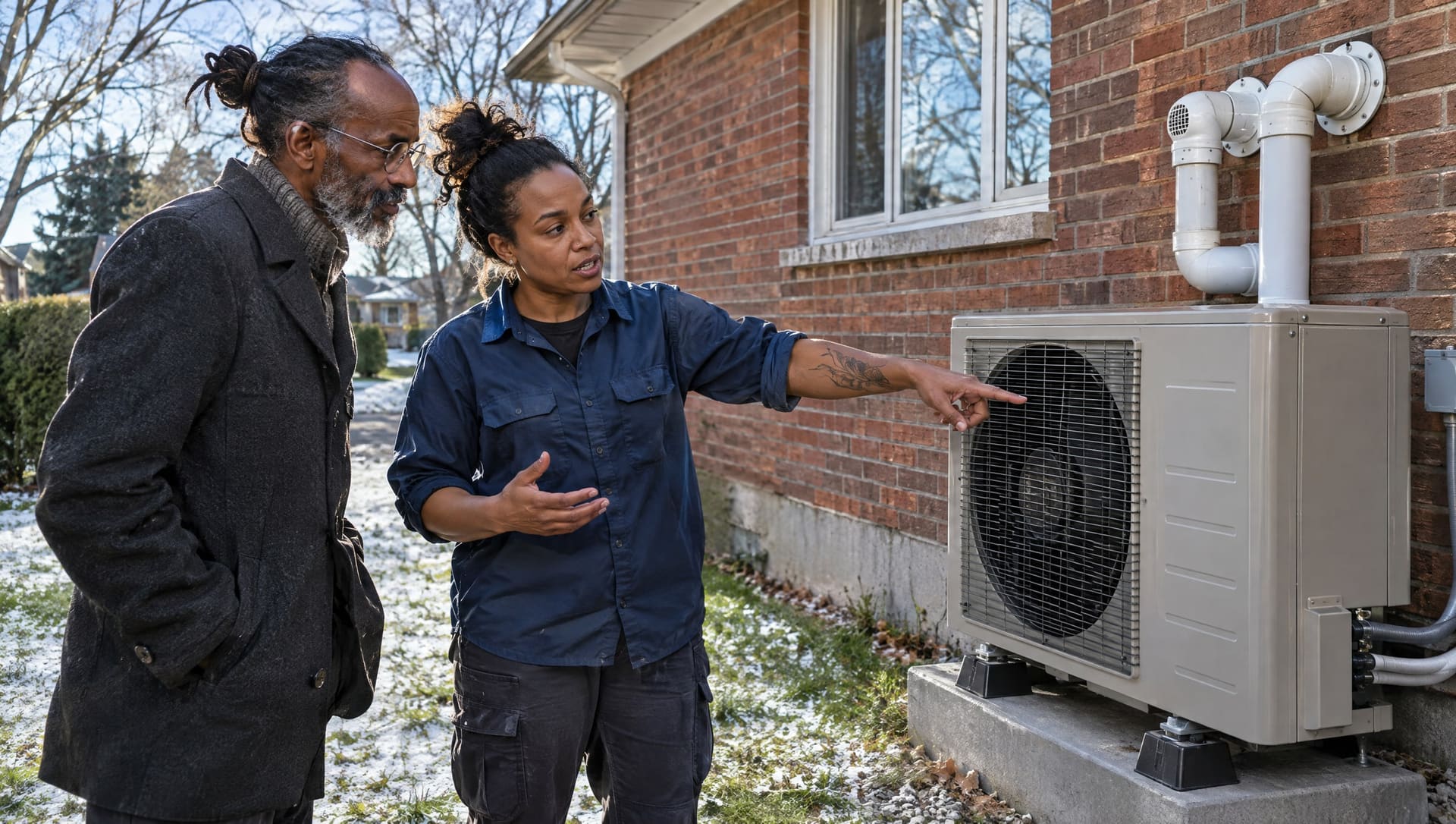
- A heat pump's outdoor unit should sit on a stand or wall bracket above typical drifts, away from roof drip lines, with room to shed the water it produces when it defrosts.
- A high-efficiency furnace's intake and exhaust pipes need to stay clear of snow. After a storm, it is safe to check them and clear them gently by hand.
- Plan where the equipment and vents go with your snow in mind, not just the shortest pipe run.
One gentle reminder for any home that keeps a gas or propane furnace: the Ontario Fire Code requires a working carbon monoxide alarm next to each sleeping area of a home with a fuel-burning appliance, a fireplace or an attached garage. Test yours when you change the clocks.
Is there a grant for a new furnace in Ontario?
Programs come and go, and their rules change. Over the years, federal and provincial programs and gas utility efficiency programs have offered support for some upgrades, and heat pumps and home insulation have often been the focus more than furnaces. Whether anything is available when you are ready depends on the programs open at that moment.
The practical steps are the same either way:
- Look up current programs before you sign anything, using official government and utility sources.
- Read the conditions carefully. Some programs have required an energy assessment before the work starts, specific equipment ratings, or pre-approval.
- Ask your installer which programs the proposed equipment would qualify for, and get the model details in writing so you can check.
- Treat any rebate as a pleasant extra, not the reason to choose a system.
Is there a rebate available for high-efficiency furnaces in Ontario?
The same approach applies. High-efficiency furnaces are now the normal choice for new gas installations, so separate furnace rebates have been less common than support for heat pumps or insulation. Check what is open at the time, and confirm the conditions before the work is booked rather than after.
Manufacturer warranties deserve the same care. Many require registration within a set period after installation and regular maintenance, so keep the paperwork and register the equipment promptly.
Who should do the work?
Gas and propane appliances in Ontario are installed to the CSA B149.1 Natural Gas and Propane Installation Code, adopted under Ontario Regulation 212/01. At Bethany Heating, gas work is performed by TSSA-certified gas technicians. Heat pumps involve refrigerant, and that work is performed by 313A refrigeration and air conditioning mechanics.
A sensible way to decide
- Find out what fuel you have now and whether gas is likely to reach your road.
- Note which rooms are cold and where the ducts run.
- Ask for options that include keeping your current furnace, replacing it, and adding a heat pump.
- Compare running-cost estimates for your house, and check current rebates last.
If you would like help weighing a heat pump against your current furnace, you can read more about heat pumps at Bethany Heating.