A furnace that stops working on a cold night feels like a big problem. Usually it is not. Most breakdowns come from a handful of small parts and simple conditions, and many of them have a clear cause you can understand before anyone arrives. This guide walks through what usually goes wrong, which repairs are the larger ones, and what to do about the reset button.
What is the most common furnace failure?
The most common cause of a furnace shutting down is airflow. A clogged filter starves the furnace of air, the heat exchanger runs hot, and a safety switch called the high limit turns the burners off. The blower may keep running, so you feel air at the registers but it is cool. Once things cool down the furnace may try again, and the cycle repeats.
After airflow, the usual suspects are a short list of ignition and safety parts:
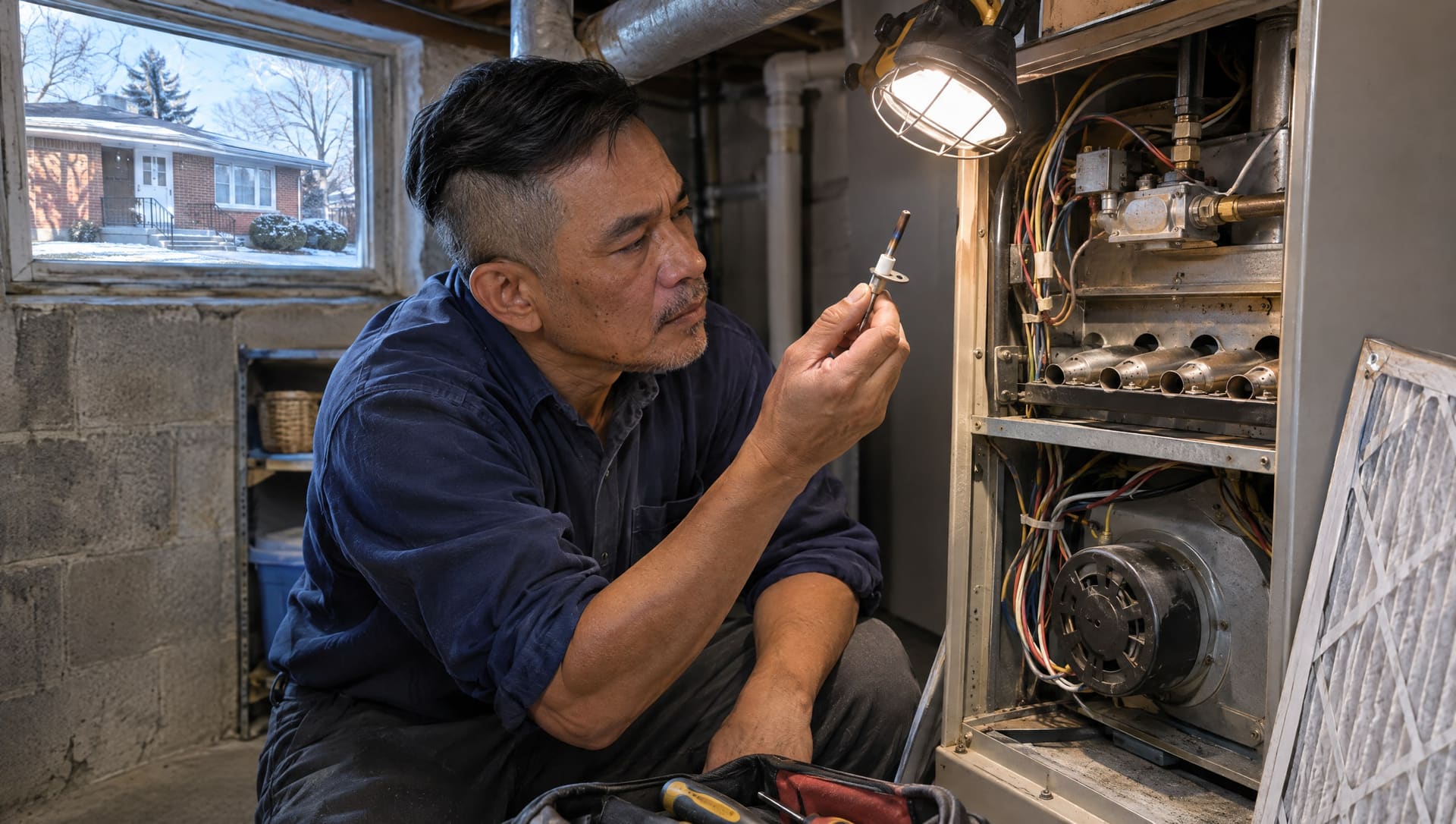
- The hot-surface igniter, which glows to light the gas. It wears out over time and can crack.
- The flame sensor, a small metal rod that confirms the burners are lit. A light coating on it can make the furnace light and then shut off within seconds.
- The pressure switch, which checks that the venting is clear before the furnace lights. On a high-efficiency furnace it often trips because of a blocked vent or a full condensate line rather than a fault in the switch itself.
- The thermostat, including dead batteries or a setting that was changed by accident.
These are ordinary repairs. The parts are small, and the work is mostly about finding the right one.
Why do Woodland Hills furnaces stop after a snowstorm?
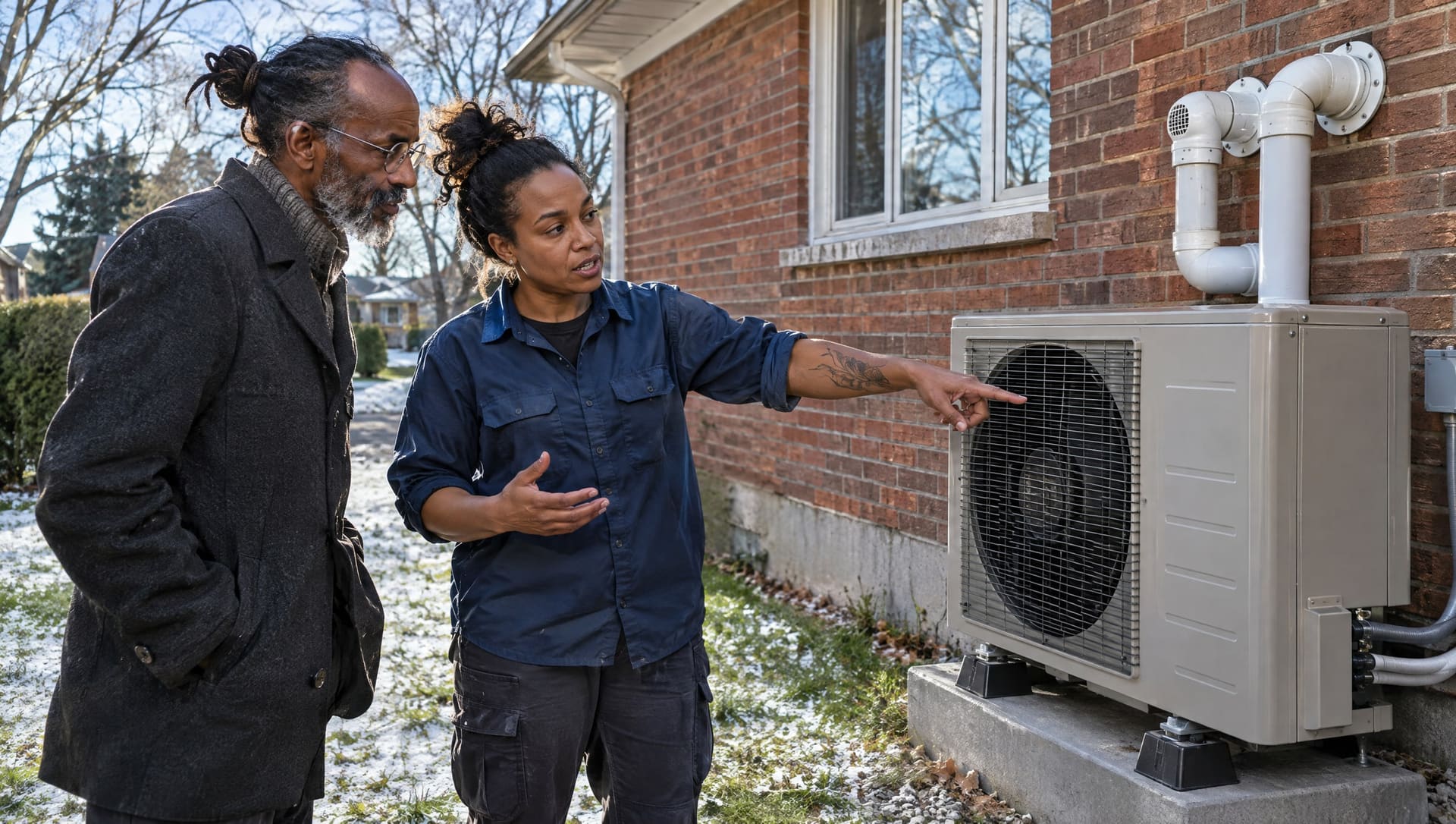
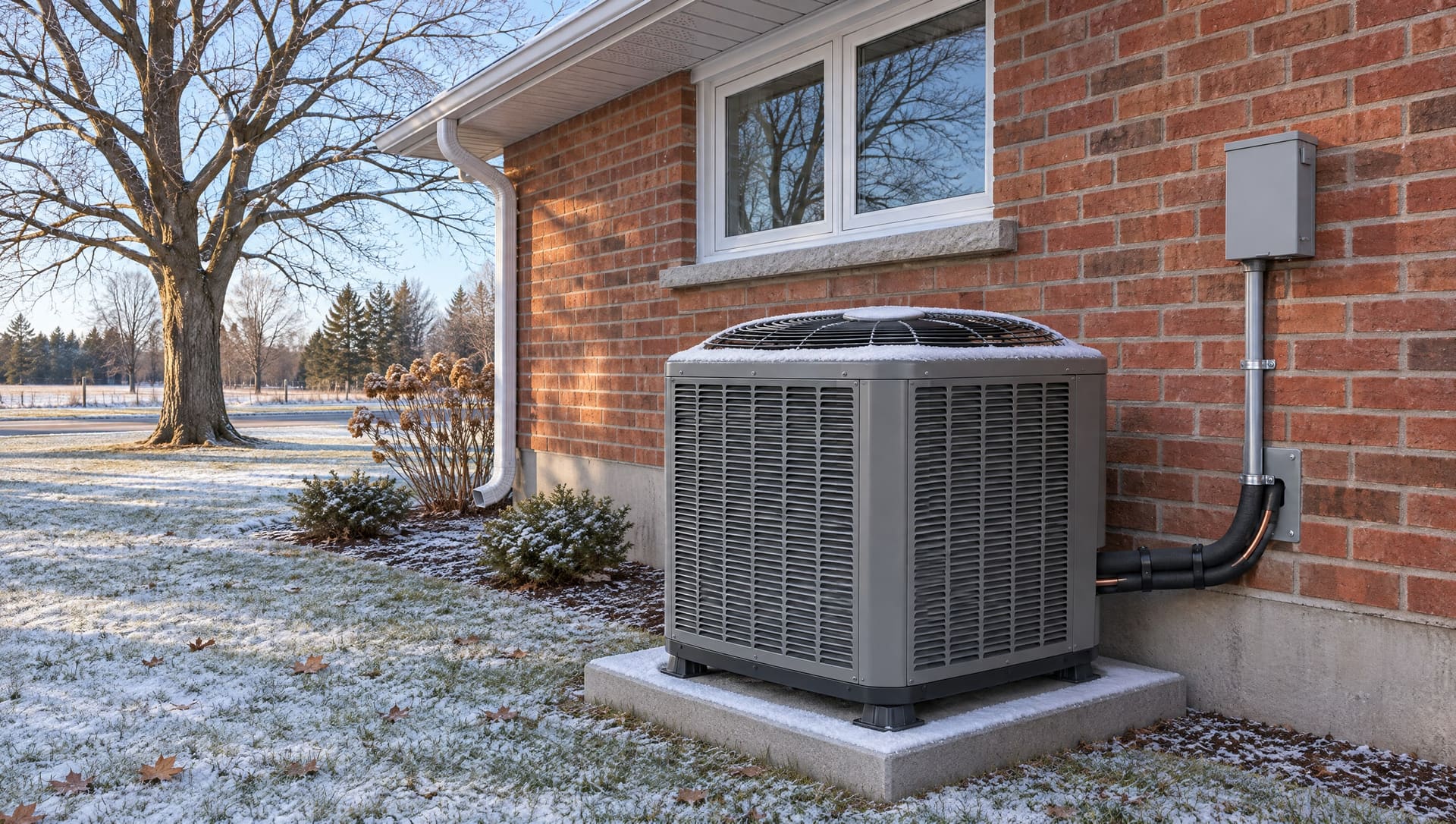
Homes in Woodland Hills, Rustlewood Avenue and Country Place mostly have high-efficiency condensing furnaces that draw in air and push out exhaust through two plastic pipes in the side wall. When those pipes are buried in a drift, the furnace shuts itself off. That is the safety system doing its job.
Snow here is not a small matter. At Peterborough A, the nearest Environment Canada climate station, the 1981-2010 normals record 151.2 cm of snow a year, with January the snowiest month at 40.0 cm and snow depths reaching up to 71 cm. Drifts against a side wall can easily cover a pair of pipes.
The other winter fault in these houses is a frozen condensate line. A condensing furnace produces water, and if the drain line freezes or clogs, the water backs up and the furnace stops.
What is safe to check before you call?
You can check a few things calmly, without opening anything:
- The thermostat is set to heat, set above room temperature, and has working batteries.
- The furnace power switch, which looks like a light switch on or near the furnace, is on.
- The filter is not visibly grey and clogged. If you have a spare, swap it in.
- The furnace door is closed properly. Many furnaces will not run with the door off.
- The intake and exhaust pipes outside are clear of snow and ice. Clear them by hand or with a soft brush.
- Any drain line you can see is not kinked or sitting in a pool of water.
What can wait for a technician: anything inside the burner compartment, gas valves, wiring, and the control board. If you smell gas, leave the house and call your gas utility from outside. That is the one step that should not wait.
Where is the reset button on my furnace?
This is one of the most common questions, and the honest answer is that many modern gas furnaces do not have a single reset button. On most of them, a reset means turning the power switch off, waiting a minute or so, and turning it back on. That restarts the control board and lets the furnace try its start-up sequence again.
Some furnaces do have reset buttons on individual parts:
- A rollout switch near the burners, which trips if flame or heat comes out where it should not. It usually means the furnace is not venting properly. If it has tripped, leave it and have the furnace looked at rather than resetting it.
- A reset on some blower motors, which trips when the motor overheats.
- On an oil furnace, a red reset button on the burner. Press it once at most. Pressing it repeatedly can flood the combustion chamber with oil.
A good rule for every reset: try it once. If the furnace shuts down again, the reset is pointing to a cause that needs finding, not a button that needs pressing.
What is the most expensive part of a furnace to replace?
The heat exchanger is usually the largest repair. It is the metal chamber that keeps combustion gases separate from the air moving through your house. When it cracks, those gases, including carbon monoxide, can get into the air the furnace circulates. A cracked heat exchanger is not something to leave running.
Replacing one is a lot of labour, and on an older furnace the cost often comes close enough to a new furnace that replacement is worth discussing. Check the paperwork first: heat exchangers often carry a longer manufacturer warranty than other parts, and that can change the decision.
After the heat exchanger, the mid-sized repairs are usually:
- The control board, which runs the start-up sequence and the safeties.
- The inducer motor, which pulls exhaust through the venting.
- The blower motor, especially a variable-speed motor.
These cost more than an igniter or a sensor, but on a furnace in reasonable shape they are normally worth doing. A written price before the work lets you weigh it without pressure.
What about older houses on Glengarry Road and Davis Street?
The late nineteenth-century houses on Glengarry Road and Davis Street were first heated with wood or coal stoves, and forced air came later. Technicians often find ducts squeezed into tight spaces and rooms that never quite warm up. Uneven heat in these houses is usually the layout of the ducts, not a failing furnace, so it is worth knowing before you assume something has broken.
When a furnace in one of these homes is replaced, the old brick chimney often needs a liner or a different vent. That is a planning question rather than an emergency, and our guide to furnace installation and replacement explains how it is handled.
Is your carbon monoxide alarm doing its job?
The Ontario Fire Code requires a working carbon monoxide alarm next to each sleeping area in a home with a fuel-burning appliance, a fireplace or an attached garage. Test yours when the clocks change. If it sounds, get everyone outside and call for help from there. A working alarm is the quiet safeguard behind every fault in this guide.
What does a repair visit involve?
The technician confirms what you noticed, tests the furnace, and works through the likely causes in order. You see what was found and get a written price before any part is fitted. Natural gas and propane furnaces in Ontario are serviced to the CSA B149.1 installation code, and Work is performed by TSSA-certified gas technicians.
If your furnace is giving you trouble, our furnace repair page explains how to arrange a visit.